What's included
Reduction in
manual workflow load
What's included
The problem with
"messy" internal tools
Most teams start with simple zaps that quickly spiral into unmanageable spaghetti code. When an API changes or a token expires, business-critical processes break silently.
We treat automation as software engineering. Every workflow is mapped, error-handled, and documented so your team isn’t dependent on a black box.
Deliverables
What's included
Strategy
Architectural alignment before implementation.
- Workflow mapping
- Success criteria definition
- Risk & dependency review
Build
Controlled deployment of automation infrastructure.
- Automation flows
- System integrations
- QA & testing checklist
Handoff
Operational enablement and system ownership transfer.
- Technical documentation
- Team training
- Operational runbook
Support
Ongoing performance governance and system optimization.
- System monitoring
- Iteration cycles
- Performance adjustments
How we work
A process built for results
Clear milestones, constant communication, and zero hand-waving. Here’s how we get from idea to impact.
Discovery & Success Criteria
We map your current workflows, identify bottlenecks, and define clear metrics for success.
Map Workflows + Data Access
We document every step, identify bottlenecks, and determine what data and systems need to connect. No surprises down the road.
Build + Test + Security Review
We build incrementally, test thoroughly, and review security at every stage. You see progress weekly and can give feedback early.
Launch + Monitor + Iterate
Go live confidently. We monitor performance, catch issues, and optimize based on data.


AI agents & internal tools examples
See what's possible
Real scenarios we’ve automated for teams like yours
Lead Intake & Enrichment
- Cleaner leads. Faster handoff.
Support Triage
- Faster triage. Cleaner queues.
Invoice Processing
- Fewer errors. Faster close.
What clients say
Vikram Iyer
“TATVAH’s team understood our production requirements quickly and delivered an automation solution that integrated seamlessly with our existing manufacturing setup.”
Priya Nair
“The installation and commissioning were handled professionally. The team maintained excellent coordination throughout the project and provided timely technical support.”
Ananya Sharma
“We appreciated TATVAH’s practical approach to automation. Their solution helped us improve process control and operational reliability.”
Karthik Reddy
“From system integration to commissioning, the project was executed with strong technical expertise and attention to detail.”
Neha Pradeep Rao
“Their technical team was responsive throughout the project and helped our team understand and operate the new automation system effectively.”
FAQ
Common questions
Everything you need to know before we start working together.
What is factory automation?
Factory automation uses control systems, machines, sensors, robots and software to perform manufacturing operations with minimal manual intervention. It helps improve productivity, consistency, quality and workplace safety.
What is the difference between factory automation and process automation?
Factory automation generally focuses on discrete manufacturing activities such as assembly, packaging, material handling and machine operations. Process automation focuses on continuously controlling variables such as temperature, pressure, flow and level in industries such as chemicals, oil & gas, power and pharmaceuticals.
What role do PLC and SCADA systems play in automation?
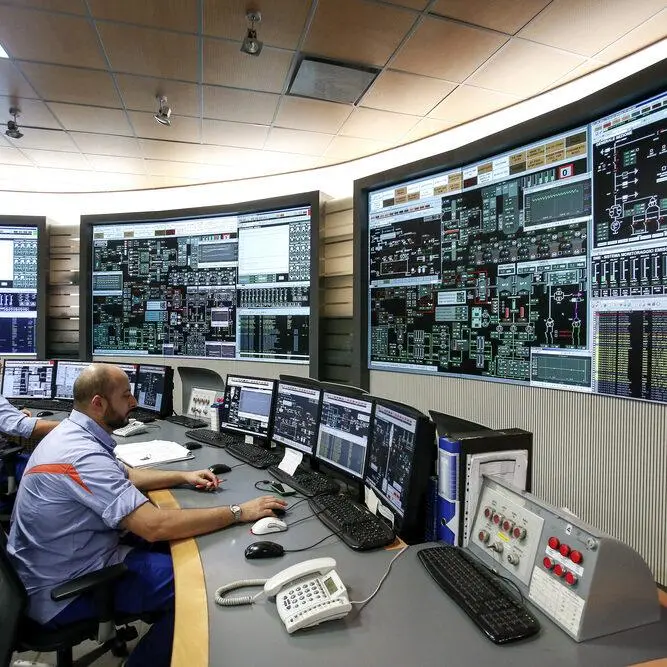
A PLC (Programmable Logic Controller) performs real-time control of machines and processes, while SCADA (Supervisory Control and Data Acquisition) provides monitoring, visualization, alarms and data collection. Together, they provide an important foundation for industrial automation.
How can automation reduce machine downtime?
Automation systems can continuously monitor equipment parameters such as temperature, vibration, current and operating status. By identifying abnormal conditions early, maintenance teams can take action before a minor issue develops into a major equipment failure.
How does Industry 4.0 improve industrial automation?
Industry 4.0 connects automation systems with technologies such as Industrial IoT, cloud and edge computing, AI, robotics and advanced analytics. This allows manufacturers to collect and analyze real-time data, improve decision-making, optimize processes and move toward smarter, more connected factories.